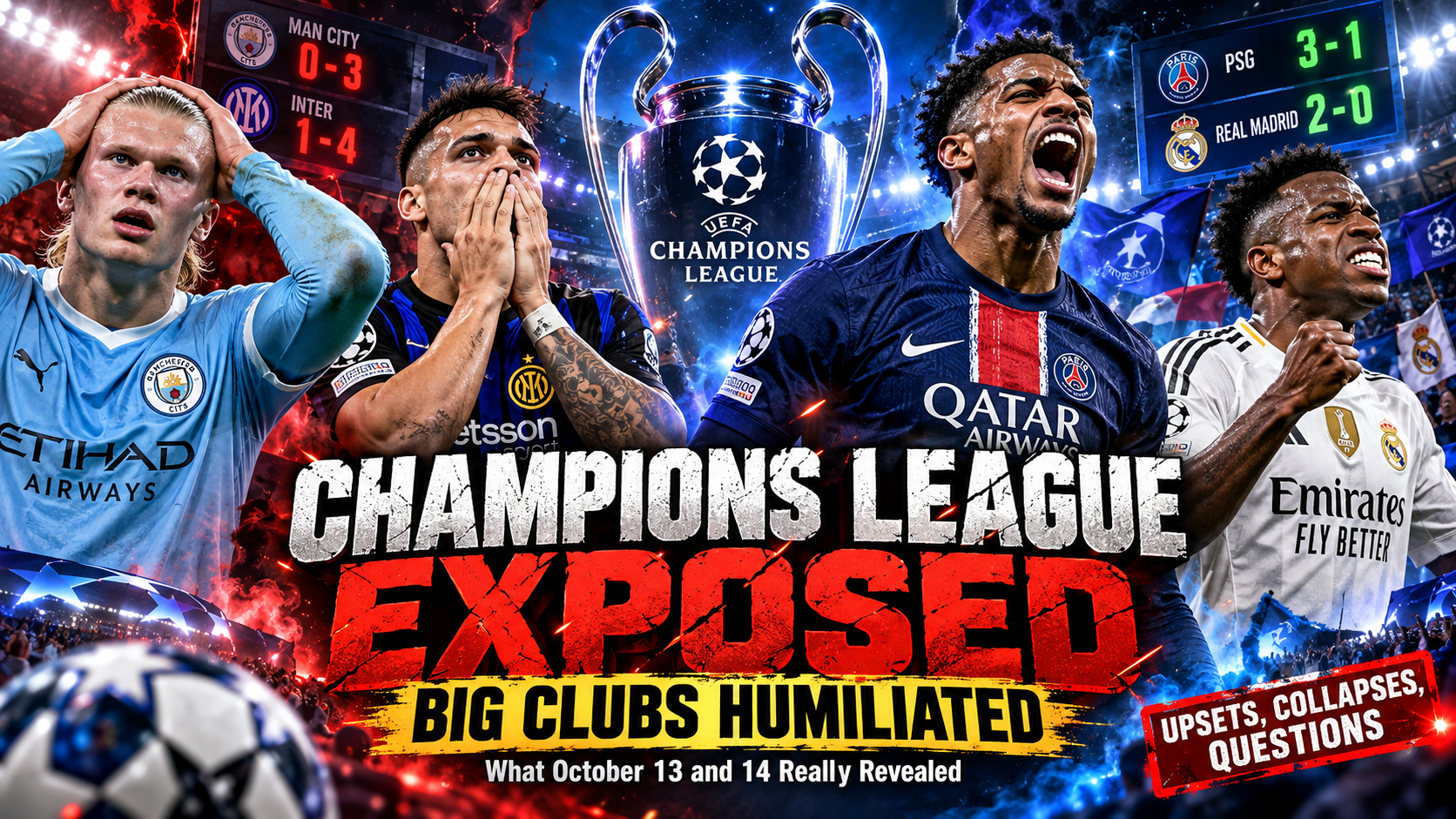
Champions League 2026: Big Clubs Exposed in Matchday 2
Champions League 2026: Big Clubs Exposed in Matchday 2
The Champions League delivered 78 goals across 18 matches on October 13 and 14, 2026. Manchester City lost 4 to 2 against PSG, Inter conceded four goals at home against Club Brugge, Bayern Munich drew with Viking, and Manchester United suffered another European defeat. But the biggest story wasn't simply the unexpected results. It was how Europe's most recognizable clubs struggled when opponents challenged their weaknesses.
The second round of the 2026/27 Champions League league phase was supposed to help establish the early hierarchy of European football.
Instead, it raised some uncomfortable questions.
Does Manchester City's attacking talent disguise defensive weaknesses? Is Inter's reputation for defensive organization becoming outdated? And why do so many supporters continue treating Manchester United as an elite European team when the results suggest otherwise?
These questions are more interesting than simply ranking the biggest upsets.
According to the official UEFA Champions League results, the two nights produced 78 goals and several results that challenged expectations.
Here is what we learned.
1. Italian Football Has a Problem That Cannot Be Ignored
Four Italian clubs entered Matchday 2.
All four lost.
Inter were beaten 4 to 3 by Club Brugge. Napoli lost 3 to 1 against Villarreal. Roma surrendered a 3 to 1 lead and eventually lost 4 to 3 against Real Madrid. Como suffered a 3 to 2 defeat at Feyenoord.
As Reuters reported in its analysis of Italian clubs' European struggles, it was a particularly damaging round of results for Serie A.
But the deeper concern is how these teams lost.
Inter conceded four times at home. Roma failed to protect a two goal advantage. Napoli and Como struggled to respond effectively when their opponents took control.
It would be ridiculous to declare Italian football finished after two nights.
Yet it would be equally irresponsible to ignore the results.
Italian clubs have built their European reputation on tactical intelligence, defensive structure and game management.
Those qualities mean little when teams cannot execute under pressure.
The problem isn't necessarily that Serie A lacks talented players or capable coaches.
It is that its representatives failed to demonstrate the adaptability required at the highest level.
The uncomfortable question: Is Italian football becoming too dependent on tactical reputation while other European leagues develop more aggressive and adaptable approaches?
One matchday cannot settle that debate.
It can certainly start it.
2. Inter's Defeat to Club Brugge Exposed More Than Defensive Mistakes
Inter's 4 to 3 defeat against Club Brugge was arguably Tuesday's biggest embarrassment.
Nicolò Tresoldi scored a hat trick, repeatedly punishing Inter's defense in situations where the Italian side should have been more organized.
Lautaro Martínez responded with two goals, but Inter never regained sufficient control.
The official Inter match report and video highlights show how the game developed from a competitive first half into a damaging defensive performance.
Club Brugge deserve substantial credit.
They did not simply defend deep and hope for a fortunate counterattack.
They were prepared to attack Inter, take risks and exploit mistakes.
That matters because smaller clubs are too often praised for their courage rather than their actual quality.
Brugge did not win because Inter forgot how to play football.
They won because they executed important moments better.
Inter's attacking response was respectable. Their defensive organization was not.
And that distinction should worry a club that recently built its European reputation on being difficult to break down.
3. Manchester City Have a Problem Erling Haaland Cannot Solve
Manchester City lost 4 to 2 at home against Paris Saint Germain.
By halftime, City were already trailing 3 to 0.
PSG repeatedly attacked dangerous spaces and forced City's defensive structure into uncomfortable situations.
Désiré Doué, Ousmane Dembélé and Vitinha helped establish the visitors' lead.
Erling Haaland responded with two second half goals, but the damage had already been done.
The Reuters report on Manchester City's defeat to PSG highlights how PSG established control early before City attempted a comeback.
And that brings us to the most important question.
What is the point of having one of the world's most dangerous strikers if your defensive structure repeatedly leaves you chasing games?
Haaland did what he is paid to do.
He scored.
Twice.
City still lost.
This shouldn't become another pointless debate about whether Haaland disappears in important matches.
The real concern is how easily PSG created opportunities against an opponent with Champions League ambitions.
City have enough attacking talent to trouble almost any team.
But their capacity to score does not automatically compensate for their defensive vulnerabilities.
Against elite opponents, conceding three times before halftime is rarely sustainable.
And that should be a much bigger concern than any argument about one striker's individual performance.
4. Bayern Munich's Draw Against Viking Was a Warning
Bayern Munich drew 3 to 3 against Viking.
For the Norwegian club, it was a remarkable achievement.
For Bayern, it was an uncomfortable reminder that financial superiority does not guarantee control on the pitch.
Harry Kane helped Bayern recover from a difficult position, scoring twice.
But Michael Olise's dismissal weakened Bayern, and Herman Haugen scored the late equalizer.
The sequence was covered in Reuters' Matchday 2 report on Bayern and Tuesday's biggest shocks.
There is nothing embarrassing about facing a well organized opponent.
The concern is how an experienced European contender handles adversity.
Bayern demonstrated attacking quality during their comeback.
They also struggled to close the game.
That contradiction matters.
A Champions League contender must do more than create chances and rely on individual talent.
It must manage difficult periods intelligently.
Viking proved capable of exploiting the moments when Bayern lost that control.
This draw does not make Bayern a poor team.
It does reveal weaknesses that stronger opponents may target later in the season.
5. Manchester United Need to Stop Living Off Their Reputation
Atlético Madrid defeated Manchester United 2 to 0.
Pablo Barrios scored inside the opening minute.
Leny Yoro was sent off.
Ademola Lookman added Atlético's second goal.
As the UEFA Matchday 2 review confirms, United suffered another damaging European result.
The red card complicated everything.
But it should not automatically become an excuse for the entire performance.
Elite teams need to demonstrate structure when games stop following the original plan.
They need to respond to early goals, protect dangerous areas and remain competitive when circumstances change.
United have struggled to demonstrate those qualities consistently.
Supporters can debate individual players, managers and recruitment decisions.
But there is a larger question.
At what point does Manchester United stop receiving elite status simply because of what the club achieved in the past?
A famous badge attracts attention.
It does not win football matches.
United's history deserves respect. Their current performances deserve scrutiny.
Those two statements should not be confused.
6. Real Madrid's Comeback Was Brilliant, but Roma Helped Make It Possible
Real Madrid defeated Roma 4 to 3 after trailing 3 to 1.
Antonio Rüdiger scored the late winner against his former club.
The comeback added another dramatic chapter to Real Madrid's Champions League history.
But describing the result as inevitable because of Madrid's reputation would be lazy analysis.
Roma had a two goal lead.
They were in a position to secure an extraordinary result.
Then their control disappeared.
According to UEFA's official team results, the match ended 4 to 3 in Madrid's favor.
Real Madrid deserve credit for exploiting Roma's weaknesses.
But Roma also deserve criticism for allowing a favorable situation to deteriorate.
The obsession with Real Madrid's comeback mentality sometimes ignores the responsibility of their opponents.
Madrid's history does not force defenders to make mistakes.
It does not require teams to surrender possession in dangerous areas.
It does not automatically turn every late opportunity into a goal.
Madrid executed.
Roma failed to protect their lead.
Both facts matter.
7. Aston Villa's 6 to 0 Victory Was More Than an Impressive Scoreline
Aston Villa defeated Fenerbahçe 6 to 0 at Villa Park.
Nicolas Jackson and Ross Barkley scored twice each, while Johan Manzambi and Tammy Abraham also contributed to the scoring.
The Guardian's Aston Villa vs Fenerbahçe match report details the scale of Villa's victory and the attacking efficiency behind it.
For Unai Emery, the result reinforced his reputation for preparing teams effectively for European competition.
Villa were aggressive, direct and clinical.
They did not stop attacking after establishing a comfortable lead.
But Fenerbahçe's performance deserves equal attention.
Conceding six goals cannot simply be explained away by acknowledging that the opponent played well.
At some point, defensive discipline and adaptability become unavoidable questions.
A side that qualifies for the Champions League has earned the right to compete.
That qualification does not guarantee it is equipped to manage every level of opposition.
Fenerbahçe discovered that difference in brutal fashion.
For Villa, the victory was a statement.
For Fenerbahçe, it was an examination of how far the club still needs to improve.
8. Liverpool Scored Six Goals, but Three Goals Conceded Still Matter
Liverpool beat LASK 6 to 3 in Austria.
Bradley Barcola scored a hat trick, producing the kind of individual performance that immediately attracts attention.
The Guardian's analysis of Liverpool's victory over LASK highlights both their attacking productivity and the problems that emerged during the match.
Liverpool deserve recognition for creating so many opportunities.
But an important distinction needs to be made.
Scoring six goals does not automatically mean a team played a complete match.
Conceding three remains a potential warning sign.
Liverpool had enough attacking quality to overcome their mistakes against LASK.
Would those same mistakes be survivable against Real Madrid, PSG or Bayern Munich?
That is a much more interesting question than simply celebrating the final score.
An elite attack can win individual matches.
A balanced team is better equipped to win major competitions.
Liverpool showed plenty of the former.
They still have work to do on the latter.
9. Barcelona Are Dangerous, but Declaring Them Favorites Is Premature
Barcelona defeated Galatasaray 4 to 1 in Istanbul.
Lamine Yamal contributed two assists, demonstrating the creative ability that continues to make him one of Europe's most exciting players.
The official UEFA Tuesday recap confirms that Barcelona recovered from falling behind and finished with a convincing victory.
The performance was encouraging.
But this is where the football media often becomes irrational.
One convincing victory against Galatasaray does not automatically make Barcelona the best team in Europe.
Their attacking talent is obvious.
Their capacity to create opportunities is impressive.
Yet the important questions remain.
How will Barcelona defend against teams capable of controlling central spaces?
Can they maintain their intensity throughout a demanding season?
Will their younger stars deliver the same level of consistency against the strongest opponents?
Barcelona have given supporters reasons to feel optimistic.
They have not eliminated every legitimate concern.
10. Slovan Bratislava's Defeat Shows the Gap Between Qualification and Competitiveness
Slovan Bratislava lost 3 to 0 at home against Stuttgart.
After a 6 to 1 defeat against PSG in their opening match, the Slovak champions have conceded nine goals in two Champions League fixtures.
The results are documented in the official UEFA Champions League fixture and results overview.
It would be unfair to expect a Slovak club to compete financially with the strongest teams in Europe's biggest leagues.
But that should not prevent an honest evaluation of its performances.
The challenge is not simply qualification.
It is finding ways to become more competitive after qualification.
That requires stronger recruitment, better squad depth, effective player development and tactical flexibility.
The debate should move beyond whether Slovan deserve their place.
They qualified and earned it.
The real question is how Slovak football can reduce the gap between domestic dominance and European competitiveness.
Participating in the Champions League is an achievement.
Making genuine progress within the competition should be the next objective.
11. Club Brugge and Bodø/Glimt Exposed Football's Obsession With Famous Clubs
Club Brugge defeated Inter.
Bodø/Glimt beat Borussia Dortmund 1 to 0.
Neither result should be dismissed as nothing more than a lucky upset.
These clubs have their own tactical identities, technically capable players and legitimate European ambitions.
The UEFA official match results confirm two of the round's most significant victories by teams operating outside Europe's traditional financial elite.
What makes these results interesting is the contrast between reputation and execution.
Larger budgets create advantages.
More expensive players often provide greater individual quality.
But neither guarantees that a team will defend well, control transitions or make the correct decisions under pressure.
Club Brugge and Bodø/Glimt demonstrated why smaller clubs should be analyzed seriously rather than treated as background characters in the stories of more famous opponents.
They did not win because football temporarily stopped respecting hierarchy.
They won because they performed better when the game demanded it.
What Champions League Matchday 2 Really Taught Us
Across October 13 and 14, European football offered several important lessons.
Manchester City's attacking quality could not compensate for its defensive problems.
Inter's European reputation did not prevent Club Brugge from scoring four times.
Bayern Munich could not protect a narrow advantage against Viking.
Roma surrendered a commanding lead to Real Madrid.
Manchester United failed to produce the response expected from a major European contender.
Meanwhile, Aston Villa, PSG, Barcelona, Arsenal and several less celebrated clubs demonstrated the value of executing a clear game plan.
The difference between winning and losing wasn't always talent.
It was often decision making, discipline and the ability to respond when circumstances changed.
Those qualities matter in every Champions League match.
They become even more important when the knockout rounds begin.
Final Verdict: Reputation Does Not Win Champions League Matches
The Champions League continues to expose a problem in how football is discussed.
Fans often evaluate teams according to their historical achievements, spending power and most recognizable players.
Those things influence expectations.
They do not determine results.
Manchester City can score twice against PSG and still lose.
Inter can reach recent European finals and still concede four goals against Club Brugge.
Bayern Munich can dominate domestic football and still struggle against Viking.
At the same time, smaller clubs can produce intelligent, disciplined performances that deserve more respect than simply being called surprises.
It is only October.
Nobody should pretend the tournament has already been decided.
But the first two matchdays have given us a valuable reminder.
Reputation creates expectations. Execution determines results.
Frequently Asked Questions
What happened in the Champions League on October 13 and 14, 2026?
The second matchday featured 18 games and 78 goals. Major results included PSG beating Manchester City 4 to 2, Club Brugge defeating Inter 4 to 3 and Aston Villa winning 6 to 0 against Fenerbahçe.
Which teams caused the biggest upsets?
Club Brugge, Bodø/Glimt and Viking produced some of the most surprising results. Brugge defeated Inter, Bodø/Glimt beat Dortmund and Viking held Bayern to a draw.
Why did Manchester City lose to PSG?
City conceded three first half goals and struggled to contain PSG's attacking movement. Despite Erling Haaland scoring twice, City lost 4 to 2.
Who scored a hat trick against Inter Milan?
Nicolò Tresoldi scored three goals for Club Brugge in their 4 to 3 victory over Inter.
How did Real Madrid beat Roma?
Real Madrid recovered from a 3 to 1 deficit to win 4 to 3, with Antonio Rüdiger scoring the late winning goal.
How did Liverpool perform in Champions League Matchday 2?
Liverpool defeated LASK 6 to 3. Bradley Barcola scored a hat trick in a high scoring away victory.
When is Champions League Matchday 3?
The third matchday is scheduled for October 20 and 21, 2026.
Done reading? Your turn.
Think you know Soccer? Settle it.
AI builds a fresh quiz on any topic, you play it against the community and climb the leaderboard. Free, no download.
Play free in 10 seconds → 3 min read
What Is AI Sports Trivia and How Does It Work?
AI sports trivia is a quiz where the questions are written by AI instead of pulled from a fixed list. Here is how it works, why the questions rarely repeat, and how to play NFL trivia free on Spontyx.
 13 min read
Dodgers Swept 4-0: $400M Payroll, Zero NLCS Wins
The Los Angeles Dodgers spent approximately $400 million on their 2026 player payroll. The Milwaukee Brewers spent roughly $131 million. Yet Milwaukee swept Los Angeles 4 to 0 in…
 13 min read
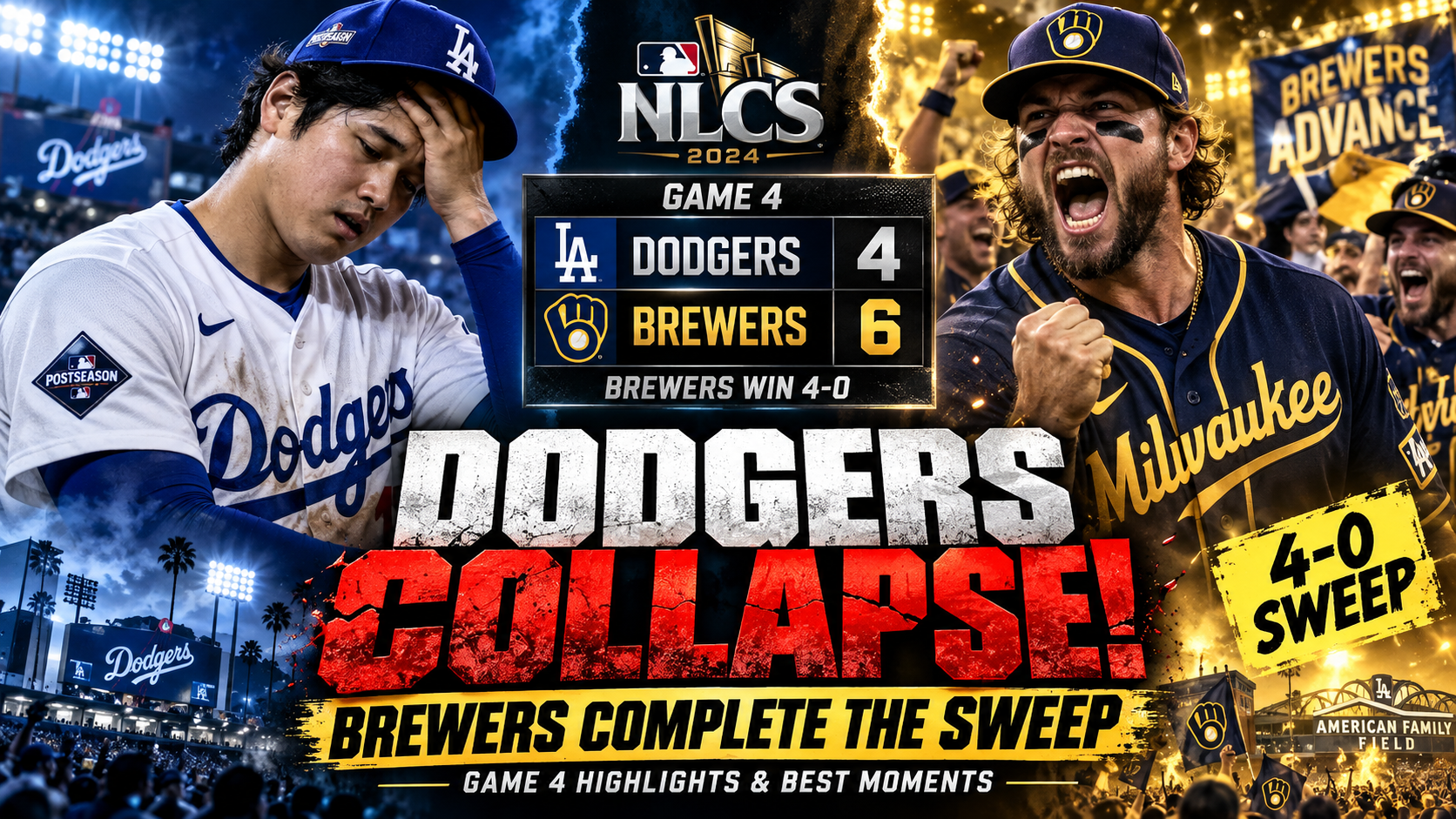
Brewers vs Dodgers Game 4 Highlights: LA's Collapse
The Milwaukee Brewers beat the Los Angeles Dodgers 6 to 4 in NLCS Game 4 on October 15, 2026, completing a four game sweep and advancing to their first World Series since 1982.…