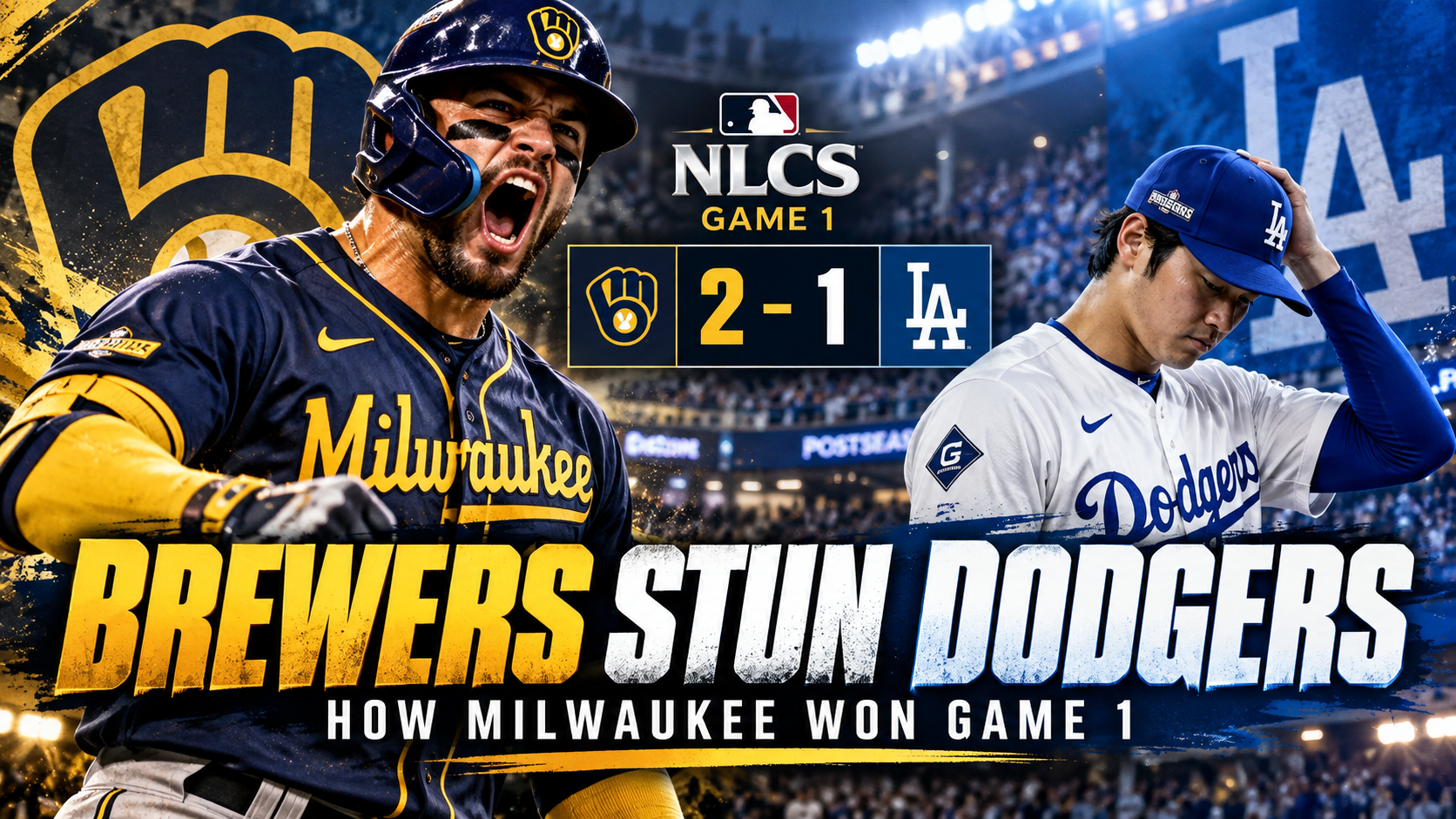
Brewers vs Dodgers: Why Milwaukee Won NLCS Game 1
Brewers vs Dodgers Game 1: How Milwaukee Won the Moments That Mattered
Milwaukee beat Los Angeles 2-1 in Game 1 of the 2026 NLCS on October 11, despite being outhit and spending much of the night under pressure. Three double plays, a perfectly executed fifth inning and 4 2/3 scoreless innings from the bullpen tell the story of how the Brewers took a 1-0 series lead.
The Dodgers had the bigger names, seven hits and plenty of opportunities. They also had Tarik Skubal on the mound, one of baseball's most difficult pitchers to beat.
Yet by the end of Sunday night at American Family Field, it was Milwaukee celebrating.
The Brewers didn't overpower Los Angeles. They survived a difficult start, punished two mistakes and kept the Dodgers from turning traffic on the bases into runs.
That distinction matters. A 2-1 score tells us who won. It doesn't explain how Milwaukee managed to win a game that Los Angeles had several opportunities to take control of.
1. The Dodgers Had Their Chance to Break the Game Open in the Second Inning
The second inning offered an early glimpse of how frustrating this game would become for Los Angeles.
Shohei Ohtani drew a leadoff walk against Jacob Misiorowski. Teoscar Hernández followed with a single, and Andy Pages eventually drove Ohtani home with an RBI single.
The Dodgers had their first run. More importantly, they had Misiorowski struggling.
Kyle Tucker walked to load the bases with one out. Los Angeles had already forced the Milwaukee starter into an uncomfortable inning, and another hit could have changed the game before the Brewers even settled in.
Instead, Kiké Hernández grounded into a double play.
Cooper Pratt fielded the ball at shortstop, and Brice Turang completed the turn at second.
That defensive sequence may have been every bit as valuable as Milwaukee's two scoring plays.
Misiorowski needed 35 pitches to get through the inning. He wasn't dominating the Dodgers, but his defense ensured that an inning full of pressure produced just one run.
There's a difference between making a pitcher uncomfortable and actually making him pay. The Dodgers accomplished the first part. Milwaukee prevented the second.
2. Brice Turang Changed the Game With One Swing
Tarik Skubal looked firmly in control through three innings.
He allowed only one hit and recorded six strikeouts during that stretch. Milwaukee wasn't consistently generating dangerous contact, and the Dodgers had every reason to feel comfortable with their ace protecting a one-run lead.
Then Turang stepped to the plate to begin the fourth inning.
On a 2-0 pitch, he drove a solo home run 384 feet to left-center field.
Just like that, the game was tied.
The home run was especially significant because Milwaukee finished the regular season at the bottom of the National League in home runs. The Brewers generally couldn't depend on winning games through sheer power.
Against Skubal, however, they needed only one mistake to erase the deficit.
Turang also contributed defensively, helping turn the double play that ended the second-inning threat.
His performance captured the kind of value Milwaukee needed in this matchup. He didn't have to dominate every plate appearance. He simply needed to make the important ones count.
3. Milwaukee Took the Lead Without Needing Another Home Run
If Turang's fourth-inning homer showed that Milwaukee could produce power against elite pitching, the fifth inning showed something more familiar.
Garrett Mitchell opened with a walk.
Cooper Pratt moved him to second base with a sacrifice bunt.
Then 21-year-old Luis Lara delivered an RBI single to center field.
Three plate appearances. One run. A 2-1 lead.
There was nothing particularly spectacular about the sequence. That was precisely the point.
Milwaukee turned a free baserunner into a scoring opportunity and then converted it.
The sacrifice bunt cost the Brewers an out, but it also placed Mitchell in scoring position for Lara. With runs difficult to manufacture against Skubal, Milwaukee chose to advance the runner rather than wait for a bigger inning.
That decision came with a risk. Sacrifice bunts do not automatically increase a team's expected scoring output, and giving away an out can be expensive.
In this particular situation, the move worked.
It also created an interesting contrast between the teams.
The Dodgers repeatedly reached base without finding the hit that would unlock a bigger inning. Milwaukee needed fewer opportunities to produce the runs that decided the game.
4. The Three Double Plays Were More Important Than the Hit Total
At first glance, seven Dodgers hits against six Brewers hits might suggest Los Angeles was unlucky.
That interpretation is too simple.
Los Angeles did create scoring opportunities, but Milwaukee also made the defensive plays required to close those opportunities down.
The double play in the second inning stopped a bases-loaded threat. Another double play against Freddie Freeman in the fifth helped Milwaukee escape after Misiorowski departed.
Across the opening five innings, the Dodgers hit into three double plays.
Those outs were costly because a double play doesn't merely end one batter's opportunity. It can erase a baserunner and, depending on the situation, bring an inning to an abrupt end.
This is where the difference between getting on base and actually scoring becomes particularly visible.
The Dodgers succeeded in creating traffic. They struggled to turn it into runs.
Milwaukee deserves credit for executing under pressure, especially through its infield defense. At the same time, Los Angeles cannot assume that generating similar opportunities will be enough in the remaining games.
Against a bullpen this effective, failing to capitalize early can become a serious problem.
5. Milwaukee's Bullpen Turned a Fragile Lead Into a Victory
Misiorowski left after 4 1/3 innings, having allowed five hits, three walks and one run across 94 pitches.
For a pitcher coming off a dominant regular season, it wasn't an effortless performance. The Dodgers consistently made him work.
But Milwaukee didn't need a complete game from its starter.
It needed the bullpen to protect a one-run advantage.
DL Hall entered in the fifth and induced the double play against Freeman. Abner Uribe later escaped a sixth-inning threat by striking out Andy Pages with runners on the corners.
Aaron Ashby followed with two scoreless innings.
Then Trevor Megill took the ninth.
The final inning wasn't entirely comfortable. Megill issued two walks with two outs, bringing Mookie Betts to the plate with the tying run in scoring position.
Betts flied out to center field, ending the game.
The Brewers' relief pitchers had delivered 4 2/3 innings without allowing a run.
That performance should make the Dodgers pay attention.
Milwaukee's bullpen had already demonstrated its value against San Diego in the NLDS, allowing only one earned run across 19 innings in four games. Game 1 against Los Angeles reinforced the same idea.
The Brewers don't necessarily need their starter to work deep into every game. They have relievers capable of handling important innings, provided those pitchers remain available and effective as the series progresses.
That's an advantage, but also something to monitor. A seven-game series can place a very different workload on a bullpen than a single postseason victory.
6. Did the Dodgers Actually Play Poorly?
The final result was disappointing for Los Angeles, but describing the entire performance as poor would miss some important details.
The Dodgers made Misiorowski throw 94 pitches in just 4 1/3 innings.
They reached base regularly enough to create several scoring threats. They also got five solid innings from Skubal, who allowed only two runs and struck out seven.
There are encouraging elements in that performance.
The problem was the lack of a decisive offensive response.
Los Angeles never produced an extra-base hit. Its seven hits were all singles.
In a low-scoring playoff game, that leaves very little margin for error. When a team can't generate extra bases with one swing, it often needs several productive plate appearances in succession to score.
The Dodgers weren't able to put enough of those plate appearances together.
It's also worth avoiding an easy conclusion. One game does not establish that the Dodgers have a fundamental problem with situational hitting.
But Game 1 exposed a weakness that Milwaukee was able to exploit: Los Angeles could reach base, yet couldn't produce the additional offense necessary to separate itself from a disciplined opponent.
7. What Game 1 Means for the Rest of the NLCS
The Brewers lead the series 1-0. That matters, especially after the Dodgers swept Milwaukee in the 2025 NLCS.
It doesn't mean the balance of power has permanently shifted.
Los Angeles still has an exceptionally strong pitching rotation and a lineup with the ability to produce far more offense than it showed on Sunday.
For Milwaukee, the challenge is repeating its execution without relying on every close situation to go its way.
Three questions stand out heading into Game 2.
Can the Dodgers turn baserunners into extra-base damage?
Los Angeles put pressure on Milwaukee throughout Game 1 but recorded no doubles, triples or home runs. More productive contact would make its offensive opportunities considerably harder to defend.
Can Milwaukee keep getting meaningful innings from its bullpen?
The relief unit was excellent in Game 1. Its effectiveness and availability will become increasingly important if the Brewers' starters continue leaving games relatively early.
Will Milwaukee keep winning the small moments?
A successful double play, a sacrifice bunt and a timely single helped decide the opener.
Those plays won't guarantee another victory. But they show how Milwaukee can compete against an opponent capable of overwhelming teams with star power.
Game 2 is scheduled for October 12, with Yoshinobu Yamamoto expected to start for the Dodgers against Logan Henderson for the Brewers.
Final Takeaway: Milwaukee Won the Game Los Angeles Failed to Finish
The Brewers didn't dominate the Dodgers in Game 1.
They didn't outhit them. Their starter didn't work especially deep into the game. And they spent several innings trying to escape difficult situations.
But Milwaukee executed when the game demanded it.
Turang delivered the tying home run. Lara supplied the go-ahead hit. The infield erased scoring opportunities, and the bullpen protected a narrow lead all the way to the final out.
For Los Angeles, that's what makes the defeat frustrating. The Dodgers created enough pressure to win but couldn't convert it into enough runs.
Game 1 wasn't proof that Milwaukee is the better team over seven games.
It was proof that against the Dodgers, the Brewers don't need to win every individual matchup.
They need to win the moments that decide the score.
Frequently Asked Questions
Who won Brewers vs Dodgers Game 1 in the 2026 NLCS?
The Milwaukee Brewers defeated the Los Angeles Dodgers 2-1 on October 11, 2026, at American Family Field, taking a 1-0 lead in the National League Championship Series.
Why did the Dodgers lose Game 1?
The Dodgers struggled to convert scoring opportunities, grounded into three double plays and failed to score against Milwaukee's bullpen. All seven of their hits were singles.
Who hit a home run for the Brewers in Game 1?
Brice Turang hit a solo home run off Tarik Skubal in the fourth inning, tying the game 1-1.
Who drove in the winning run?
Luis Lara hit an RBI single in the fifth inning, scoring Garrett Mitchell and giving Milwaukee a 2-1 lead.
How did Jacob Misiorowski perform against the Dodgers?
Misiorowski allowed one run on five hits over 4 1/3 innings. He struck out five, walked three and threw 94 pitches.
When is Brewers vs Dodgers Game 2?
Game 2 is scheduled for Monday, October 12, 2026, with Yoshinobu Yamamoto expected to face Logan Henderson.
Done reading? Your turn.
Think you know Baseball? Settle it.
AI builds a fresh quiz on any topic, you play it against the community and climb the leaderboard. Free, no download.
Play free in 10 seconds → 3 min read
What Is AI Sports Trivia and How Does It Work?
AI sports trivia is a quiz where the questions are written by AI instead of pulled from a fixed list. Here is how it works, why the questions rarely repeat, and how to play NFL trivia free on Spontyx.
 13 min read
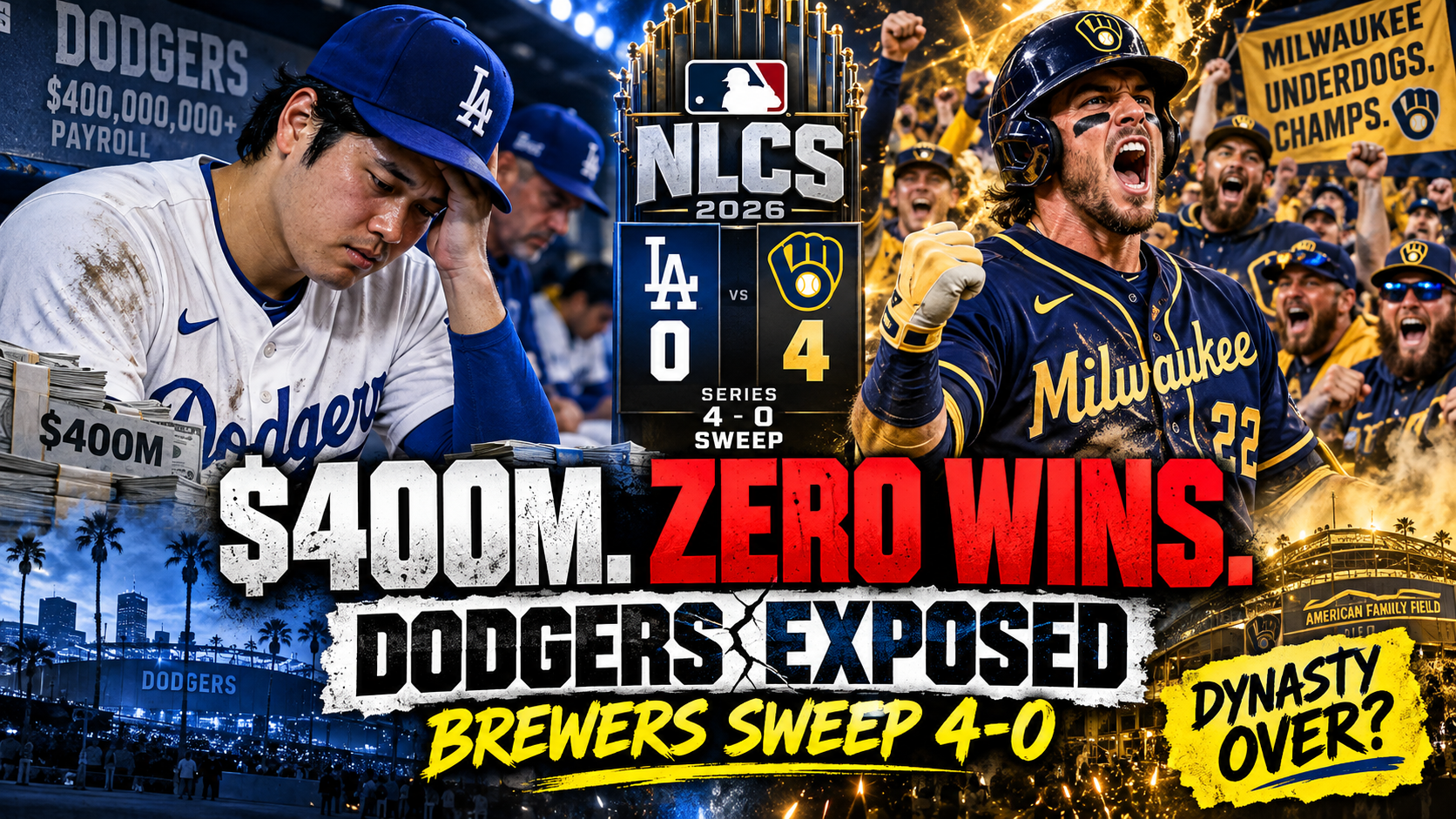
Dodgers Swept 4-0: $400M Payroll, Zero NLCS Wins
The Los Angeles Dodgers spent approximately $400 million on their 2026 player payroll. The Milwaukee Brewers spent roughly $131 million. Yet Milwaukee swept Los Angeles 4 to 0 in…
 13 min read
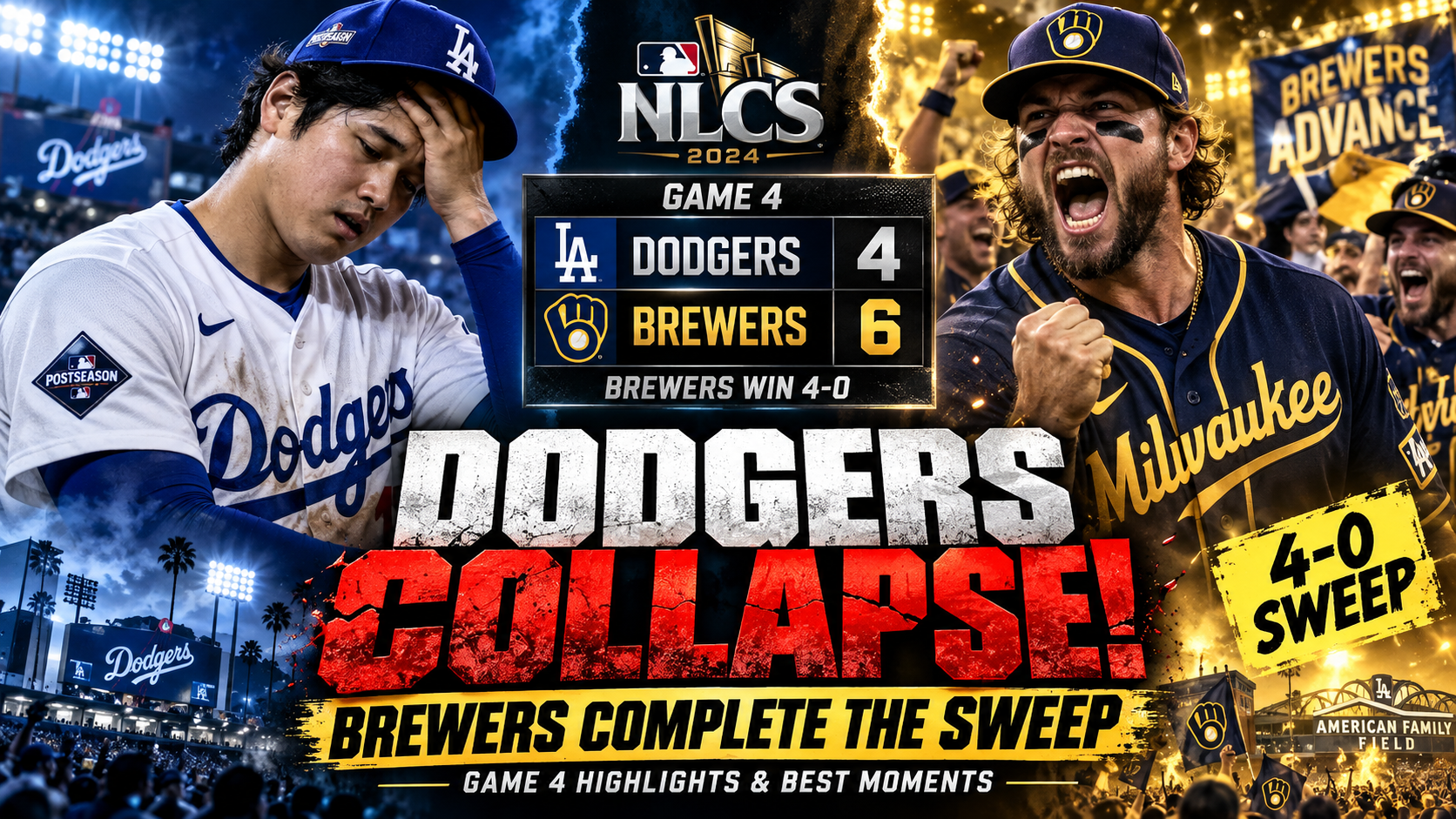
Brewers vs Dodgers Game 4 Highlights: LA's Collapse
The Milwaukee Brewers beat the Los Angeles Dodgers 6 to 4 in NLCS Game 4 on October 15, 2026, completing a four game sweep and advancing to their first World Series since 1982.…