What Makes a Good Trivia Question? 7 Rules With Examples
A good trivia question has one clear, correct answer, is worded so it cannot be read two ways, and sits at a difficulty that feels fair. It rewards knowing something, not guessing what the writer meant. Get those right and people argue about the answer, never about the question.
Most bad quizzes fail for the same few reasons: two answers are defensible, the wording is sloppy, or the question is a trick instead of a test. Here are the seven rules that separate a question people enjoy from one that starts a fight, each with a weak version and a better one.
Rule 1: It has one clear, correct answer
If two answers can both be defended, the question is broken. Before you write the question, write the answer, and make sure nothing else fits it.
Weak: Who is the greatest quarterback of all time? (Opinion. There is no correct answer, only an argument.)
Better: Which quarterback has won the most Super Bowls? (One answer, settled by the record books.)
Save opinions for debate. A trivia question needs a fact you can point to.
Rule 2: The wording is unambiguous
Read your question as if you are trying to misread it. If there is a second reading, a team will find it.
Weak: How many games did the team win? (Which team? Which season? Regular season or playoffs?)
Better: How many regular-season games did the 2007 New England Patriots win? (Every boundary is set: team, season, competition.)
Name the year, the league and the scope. Precision is not pedantry here, it is fairness.
Rule 3: The difficulty is honest
A good question is answerable by someone who knows the subject and out of reach for someone who does not. If almost no one can get it, it is not hard, it is just obscure.
Weak: What was the attendance at a random regular-season game in 1994? (Nobody knows, and nobody learns anything.)
Better: Which country hosted the 1994 FIFA World Cup? (Hard enough to separate fans, fair enough to be gettable.)
Aim for questions a knowledgeable fan can land and a casual one can take a real guess at.
Rule 4: It rewards knowledge, not trickery
A trick question catches people who actually know the answer, which is the opposite of what a quiz should do. Gotchas feel clever to the writer and cheap to the room.
Weak: Which of these players never scored a goal, if you do not count own goals and penalties? (The twist is in the wording, not the knowledge.)
Better: Which of these players scored the most career league goals? (Tests the knowledge directly, with no hidden catch.)
If the difficulty lives in the phrasing rather than the subject, rewrite it.
Rule 5: The wrong answers are plausible
For multiple choice, the wrong options are half the craft. Three obviously silly options turn a hard question into a giveaway. The decoys should tempt someone who half-knows the answer.
Weak: Who won the 2020 NBA title? A) Lakers B) A banana C) The moon D) Tuesday. (The answer gives itself away.)
Better: Who won the 2020 NBA title? A) Lakers B) Heat C) Celtics D) Nuggets. (Every option is a real contender from that era.)
Good decoys come from the same world as the answer: real teams, real names, real years.
Rule 6: It is interesting to learn
The best questions leave people a little smarter, even when they get them wrong. A fact worth knowing makes the whole quiz feel worth playing.
Weak: What is the fourth letter of a team's home city? (Pure trivia with nothing behind it.)
Better: Which city has hosted the Summer Olympics three times? (A fact people are glad to now know: London.)
If the answer makes someone go "huh, nice," you wrote a good question.
Rule 7: The facts are verified
A question is only as good as the fact under it. One wrong answer in a set and people stop trusting the whole quiz. Check the record, not your memory, especially for anything recent, because sports facts change every week.
Weak: Relying on what you think you remember about last season's stats.
Better: Confirming the number against an official record or box score before the question goes out.
The writer owns the wording. The record owns the facts. Never blur the two.
How AI writes good trivia questions
These rules are exactly what a well-built AI quiz generator has to follow, and it is how Spontyx approaches it. The AI handles the wording, generating clear questions and plausible wrong answers on any topic you name, while the facts are grounded in real sports data and the correct answer is checked before it reaches you. The model writes; the record books decide. That is also why AI trivia rarely repeats: instead of a person typing out a finite list once, fresh questions are built on demand against real data.
We go deeper into that in can AI write good trivia questions and how an AI quiz generator writes your questions. The short version: the same seven rules apply whether a human or a model is holding the pen.
Want to see them in action? Build a quiz on Spontyx, pick any topic, and watch the questions come out clear, fair and fresh.
FAQ
What makes a trivia question good?
A good trivia question has exactly one correct answer, is worded so it cannot be misread, sits at a fair difficulty, and rests on a verified fact. It tests what someone knows rather than tricking them, and ideally it teaches something worth knowing.
How do you write a good trivia question?
Write the answer first and make sure nothing else fits it, then word the question so every boundary is clear, such as the year, league and scope. Pick a difficulty a knowledgeable fan can reach, use plausible wrong answers for multiple choice, and verify the fact against a real source.
What is a bad trivia question?
A bad trivia question has more than one defensible answer, is worded ambiguously, relies on a trick instead of knowledge, uses obviously silly wrong options, or is based on an unverified fact. Any one of these turns a quiz into an argument.
How many answer options should a multiple choice trivia question have?
Four is the standard: one correct answer and three plausible decoys. The decoys should come from the same world as the answer so that someone who half-knows the topic is genuinely tempted, rather than handed the answer by elimination.
Can AI write good trivia questions?
Yes, when it is built the right way. A good AI quiz generator writes the wording and the wrong answers, but grounds the facts in real data and checks the correct answer before showing it, so the questions follow the same rules a careful human writer would. The upside is that the questions rarely repeat, because each set is generated fresh.
Done reading? Your turn.
Think you know sports? Settle it.
- Free, no card
- New SCOUT every day
- Every sport
- Compete on the boards
GTA 6 Stats Explained: Strength, Cardio, Focus
GTA 6 has just three trainable stats: Strength for Health, Cardio for Stamina and Focus for slow-motion aiming. Here is how to raise each one, and whether they fade if you stop.
Nov 22, 2026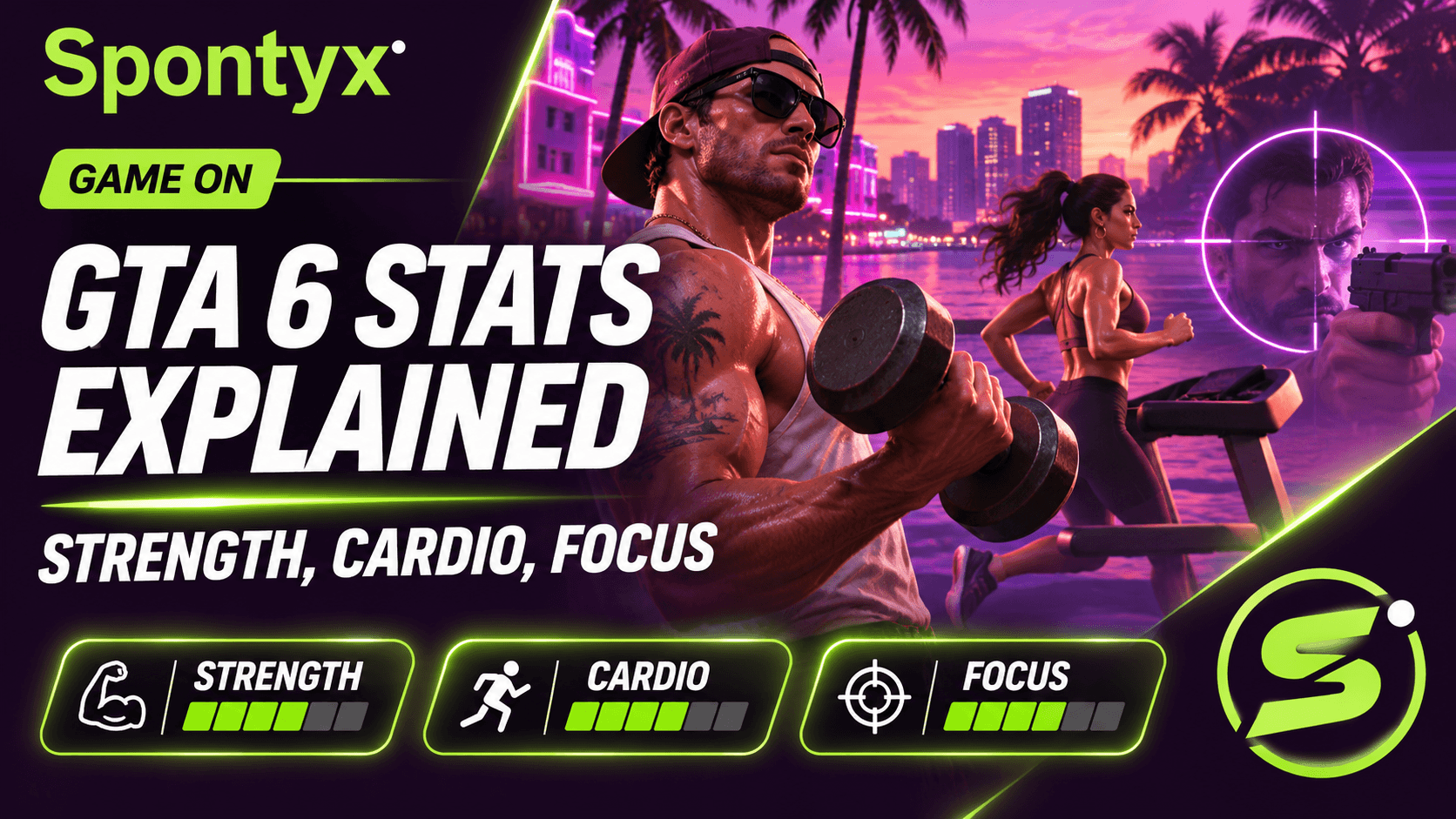
What Sports Can You Play in GTA 6? Every Sport, and Is Tennis Playable?
GTA 6 is full of sport: golf, basketball, pool, fishing, hunting, the gym and water sports like scuba. But not tennis, which is scenery only. Here is the full playable lineup.
Nov 22, 2026
How to Work Out in GTA 6: Gym Guide
Working out in GTA 6 is a real system. Here is the free home gym, every machine, how the trigger controls work, the recovery cooldown, and how to stop your gains from fading.
Nov 22, 2026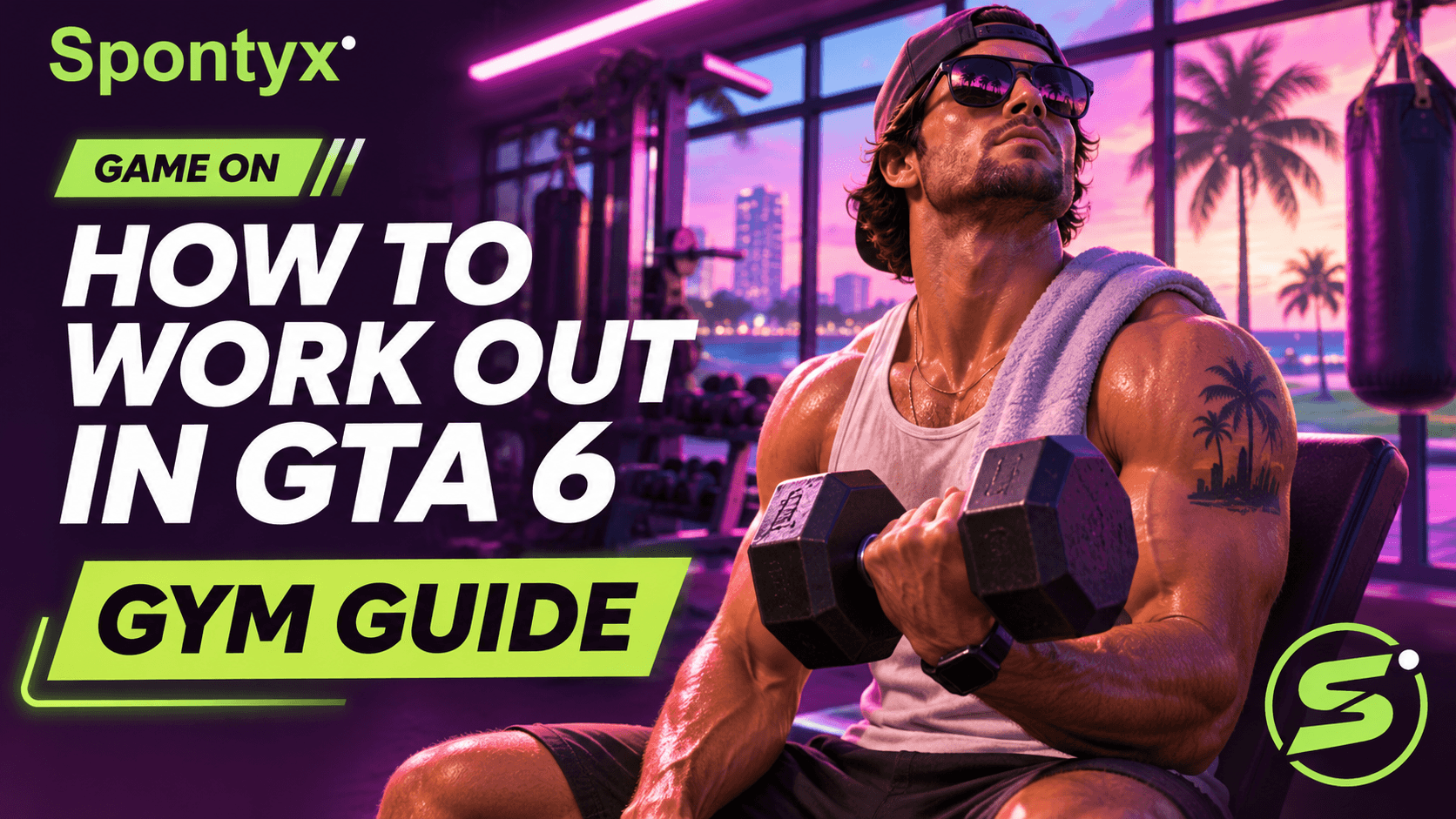
Comments
0