How Does Krillion Decide Rarity? Rarity Games Explained
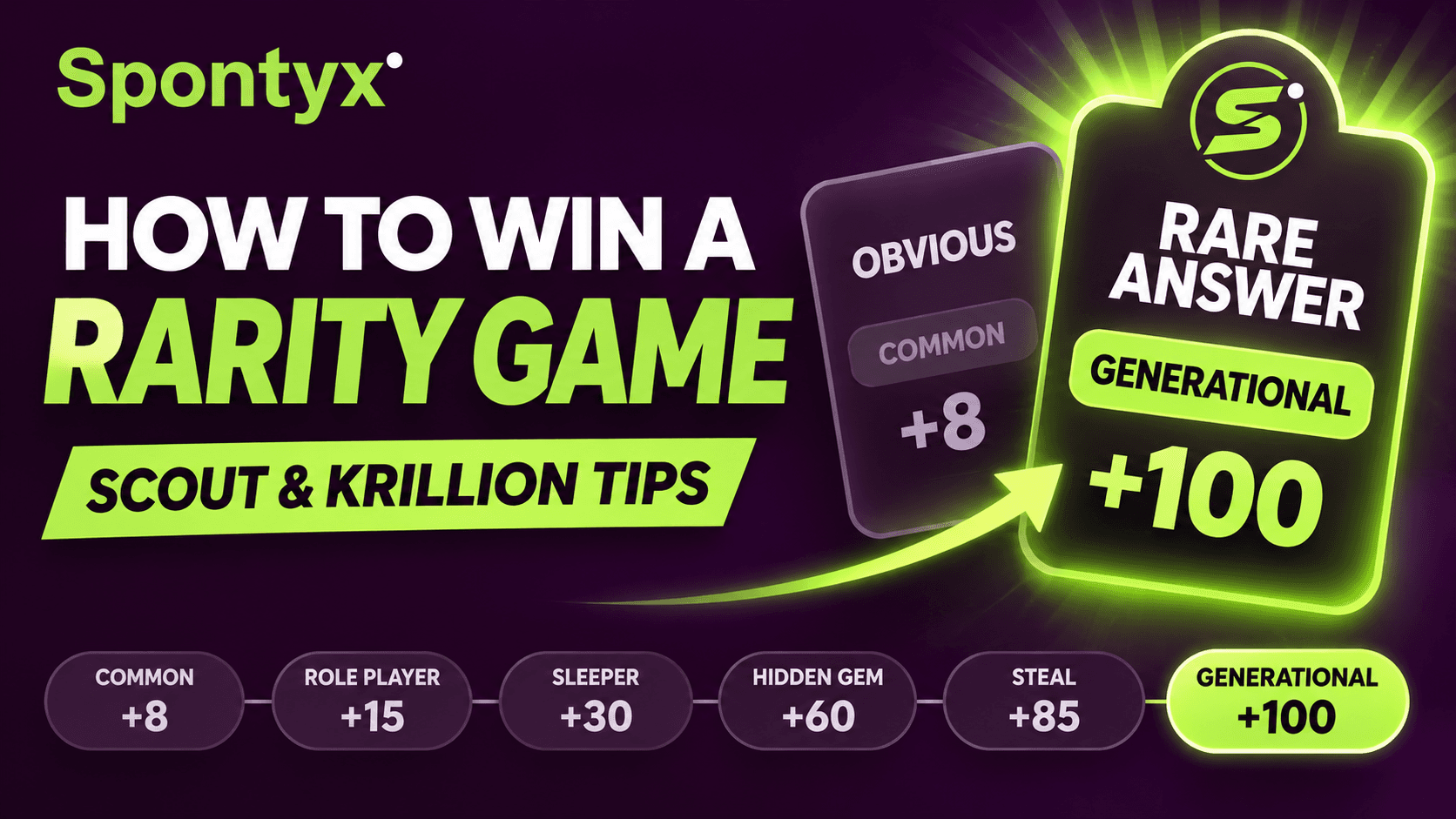
How does Krillion decide rarity? In rarity games like Krillion, your answer first has to be valid, then it is scored by how many other players gave the same answer. The fewer players who found it, the rarer it is and the more it is worth. Krillion does not publish its exact formula. SCOUT, the daily rarity game for sports, works on the same principle and shows its full ladder, from Common to Generational, on the Krillion for sports page.
In a rarity game, the obvious answer is a trap. Games like SCOUT and Krillion do not score you for being right. They score you for being rare. Everyone who knows a little gives the same famous name, and that name is worth almost nothing. The points live in the answer that is still correct but that almost nobody else thought of. This is how that scoring works, and how to find that answer on purpose instead of by luck.
Why your first answer is usually worthless
When a prompt appears, the name that jumps to mind is not your name. It is the crowd's name. It is the one the prompt was practically designed to pull out of everyone, which means most players will type it too. In a rarity game that shared answer scores close to zero, because the whole point of the system is to measure the gap between what you know and what the average player knows.
So the instinct that serves you in every other quiz, blurt the first right answer fast, is the exact instinct that sinks you here. Speed to the obvious answer is worth almost nothing. The game is asking a harder question: what else is true.
The sweet spot is rarest, but still real
Every rarity game lives on a single tension. Push past the obvious answer toward the obscure, but stop before you reach something that does not actually count. Too obvious and you score low. Too far and you score nothing, because an answer that is not valid is just a wrong answer dressed up as a clever one. The target is the deepest cut you can still defend as true. In SCOUT that gradient is drawn out for you as a rarity ruler from Common to Generational.
Here is the shape of it with a prompt almost anyone can picture. Say the prompt is name a quarterback who won a Super Bowl.
| Your answer | What happens |
|---|---|
| Tom Brady or Patrick Mahomes | Everyone says it. Scores low. |
| Nick Foles or Doug Williams | Correct, far less common. Scores well. |
| Jeff Hostetler or Brad Johnson | Correct, a genuine deep cut. Scores high. |
| A quarterback who never won | Invalid. Scores nothing. |
The skill is not knowing that Brady won. Everyone knows that. The skill is holding Brady back and reaching for Hostetler.
A method you can repeat
Rarity is not luck once you have a process. This is the one I use.
- Read the prompt and let your first answer arrive. Then set it aside on purpose. That one is the trap.
- Go one layer deeper. Shift an era, a role, or a one time winner instead of a dynasty. Ask who fits this but rarely gets named.
- Sanity check that it is actually valid. A deep cut only pays if it survives the check. If you are not sure it counts, you are guessing, not scouting.
- Commit before the timer. A great answer you did not submit scores the same as no answer at all.

How the grading actually decides rarity
Your answer is not judged against a fixed key. It is judged against the field. In SCOUT the crowd sets the tier: the share of players who gave your answer places it on the ruler, so a Common answer barely moves and a Generational one lands hard. Krillion works from the same principle, scoring you by how uncommon your valid answer is, and Immaculate Grid added a rarity score on top of its grid for the same reason. Once you understand that the crowd sets the price, you stop trying to be fast and start trying to be the only one who said it. You can feel this directly in today's SCOUT.
Practise without burning your daily
You get one scored dive a day, which is the point, so the muscle has to be built elsewhere. The cheapest practice is reading widely and quizzing often. A run through a bank of trivia questions or the harder sports sets trains the recall. Hosting or playing a pub quiz night trains the instinct for the answer other people forget. None of it is scored against your streak, so you can fail freely, which is how you actually learn the deep cuts.
FAQ
How does Krillion decide rarity?
A valid answer is scored by the share of players who gave it: the fewer players who found it, the rarer and more valuable it is. Krillion does not publish its exact formula. SCOUT grades by the share of players too, starting every prompt from a modelled crowd of 500 scouts so early players are scored fairly.
What is rarity scoring in a daily game?
Rarity scoring rewards you for how uncommon your correct answer is rather than just for being right. Common answers that most players also give score low. A valid answer almost nobody else found scores high. Games like SCOUT, Krillion and the rarity version of Immaculate Grid all use some form of it.
What is the best strategy for Krillion?
Hold back the first answer that comes to mind, since that is the one most players share, and reach for a deeper answer that is still clearly valid. The same approach works in SCOUT, which uses the same rarer is better scoring.
How do I score more in SCOUT?
Avoid the obvious name, find the rarest answer you can still defend as real, and commit before the timer. Reading widely between dives is what grows your supply of deep cuts, so the right answer is actually available when the prompt appears.
Can an obscure answer really score zero?
Yes. Rarity only pays when the answer is valid. An answer so obscure that it is not actually correct scores nothing, exactly like any wrong answer. Rarest but still real is the line you are aiming for.
Is it better to be fast or to be rare?
Rare, almost always. Speed to the obvious answer is worth very little in a rarity game. It is better to spend a few seconds finding the answer nobody else will give than to lock in the common one quickly.
Try it on today's prompt
Want to put the method to work today? Play SCOUT and watch how much further a deep cut carries you than the name everyone else typed. If you are still deciding where to play, here is the sports case for it over Krillion.
Your turn
Find the answer nobody else will
SCOUT is the free daily rarity game for every sport. A free account saves your streak and puts you on the board.
- Free, no card
- New SCOUT every day
- Every sport
- Compete on the boards
GTA 6 Stats Explained: Strength, Cardio, Focus
GTA 6 has just three trainable stats: Strength for Health, Cardio for Stamina and Focus for slow-motion aiming. Here is how to raise each one, and whether they fade if you stop.
Nov 22, 2026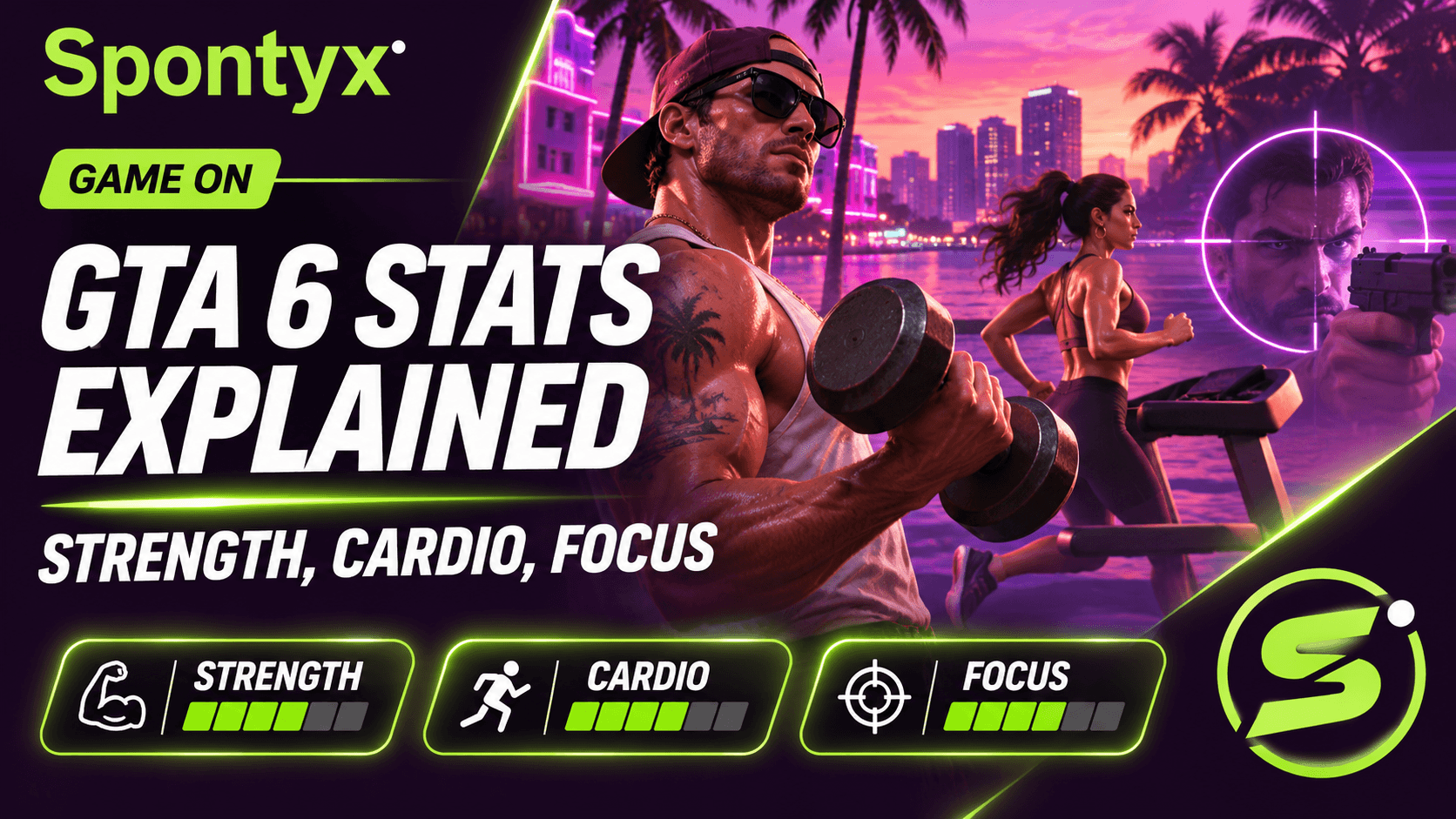
What Sports Can You Play in GTA 6? Every Sport, and Is Tennis Playable?
GTA 6 is full of sport: golf, basketball, pool, fishing, hunting, the gym and water sports like scuba. But not tennis, which is scenery only. Here is the full playable lineup.
Nov 22, 2026
How to Work Out in GTA 6: Gym Guide
Working out in GTA 6 is a real system. Here is the free home gym, every machine, how the trigger controls work, the recovery cooldown, and how to stop your gains from fading.
Nov 22, 2026
Comments
0